


















Introduction
This article explores how warehouses and supply chain organizations can strengthen inventory accuracy and forecasting by using modern data analytics. It explains the drivers of inaccuracy, how real-time analytics improves visibility, and how predictive forecasting models optimize planning and reduce carrying costs. The piece positions Rebus as a powerful analytics platform that delivers trustworthy, actionable inventory intelligence.
Table of Contents
Inventory accuracy and inventory forecasting sit at the center of warehouse performance. When inventory data cannot be trusted, every downstream decision suffers. Planners hedge with excess safety stock. Operations teams scramble to resolve shortages. Service levels slip while carrying costs rise.
For many warehouse and supply chain organizations, the root problem is not effort or intent. It is visibility. Data exists across WMS, ERP, and supporting systems, but it is often delayed, fragmented, or difficult to analyze at scale. Modern data analytics changes that equation by turning raw operational data into reliable, actionable inventory intelligence.
This article explores why inventory accuracy breaks down, how data analytics improves both accuracy and forecasting, and how platforms like Rebus help teams move from reactive inventory management to confident, data-driven planning.

Why Inventory Accuracy Matters
Inventory accuracy is more than a metric. It’s a foundation.
When on-hand inventory does not match reality, warehouses pay the price in multiple ways:
- Orders ship late or incomplete
- Labor is wasted searching for missing product
- Planners inflate safety stock to compensate for uncertainty
- Customer trust erodes
Inaccurate inventory also undermines inventory forecasting. Forecast models rely on historical demand and inventory movement data. If that data is flawed, even the most sophisticated forecasting methods will produce unreliable results.
Improving inventory accuracy is not just about counting better. It is about creating a system where inventory data reflects what is actually happening on the floor in near real time.
Common Causes of Inventory Inaccuracy
Most inventory inaccuracies are not caused by a single failure. They are the result of compounding issues across systems and processes.
Manual errors and inconsistent processes
Manual transactions, workarounds, and process variation introduce error at every touchpoint. Even small inconsistencies add up over time.
Poor cycle counting discipline
Cycle counts that are infrequent, poorly targeted, or disconnected from root-cause analysis fail to prevent recurring discrepancies.
Lagging system updates
Batch-based system updates create time gaps between physical movement and digital records. During those gaps, visibility disappears.
Siloed data across WMS and ERP
When inventory data lives in multiple systems with limited synchronization, teams struggle to establish a single source of truth.
Lack of real-time visibility
Without real-time inventory visibility, discrepancies are discovered days or weeks after they occur, long after corrective action would have been most effective.

How Data Analytics Improves Inventory Accuracy
Data analytics addresses inventory accuracy at the system level rather than relying solely on process enforcement.
Real-time data capture and validation
Modern analytics platforms ingest data continuously from WMS, ERP, and operational systems. This allows inventory movements, adjustments, and exceptions to be monitored as they happen.
Cycle count optimization
Analytics helps identify which locations, SKUs, or processes are most prone to error. Instead of counting everything evenly, teams can prioritize high-risk areas.
Root-cause analysis for discrepancy reduction
Rather than correcting counts in isolation, analytics enables teams to analyze why discrepancies occur and which operational patterns drive them.
Automated anomaly detection
Unexpected inventory swings, negative balances, or unusual adjustment patterns can be flagged automatically, reducing reliance on manual review.
Reduced dependence on manual reporting
Automated dashboards and alerts replace spreadsheets and ad hoc reports, freeing teams to focus on resolution rather than reconciliation.
Critical Data Inputs for Accurate Forecasting
Inventory forecasting improves when it draws from a broader and cleaner set of operational data.
Key data inputs include:
- Historical demand and order trends
- Supplier lead times and variability
- Seasonality and promotional effects
- Inventory movement and adjustment history
- Differences across facilities, channels, and fulfillment paths
When these data sets are unified and normalized, forecasting models gain the context needed to produce realistic, actionable plans.
Book a free demo now
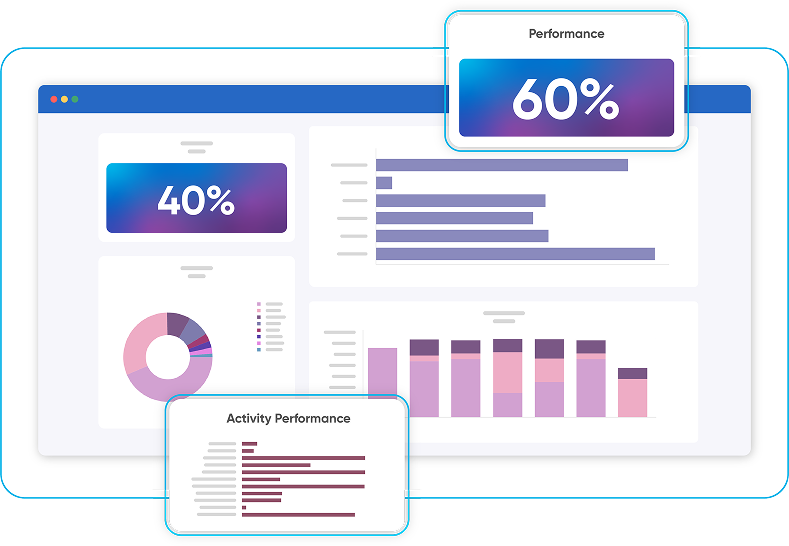
See how Rebus unifies labor, inventory, and automation data to deliver real-time visibility, smarter forecasting, and actionable warehouse insights.
- Real-time visibility across labor, processes, and inventory
- AI-powered forecasting to anticipate change and plan ahead
- Custom dashboards for faster, more confident decisions
Forecasting Methods Enhanced by Analytics
Advanced analytics does not replace forecasting methods. It strengthens them.
Time-series forecasting
Clean, accurate historical data improves baseline forecasts and reduces volatility caused by data noise.
Regression-based modeling
Analytics enables planners to test how external variables such as promotions, lead time changes, or demand shifts affect inventory needs.
AI and machine learning demand prediction
Machine learning models benefit from richer data sets and continuous feedback, improving forecast accuracy over time.
Multi-echelon inventory forecasting
Analytics supports visibility across nodes, helping organizations balance inventory across networks rather than optimizing locations in isolation.
Safety stock optimization
With better insight into demand variability and supply risk, safety stock can be set with intention instead of guesswork.
Benefits of Analytics-Driven Inventory Accuracy and Forecasting
Organizations that combine inventory accuracy improvement with analytics-driven forecasting see measurable gains.
- Fewer stockouts and overstocks
- More precise replenishment decisions
- Lower carrying costs
- Higher service levels
- Faster, more confident decision-making
These benefits compound. As inventory accuracy improves, forecasting improves. As forecasting improves, operational execution becomes more stable.
Technology That Powers Data-Driven Inventory Optimization
Not all analytics tools are built for operational inventory use cases.
Effective inventory analytics platforms share several characteristics:
- Real-time data ingestion and processing
- Native integration across WMS, ERP, and related systems
- Exception-based alerts that surface issues early
- Scalable dashboards for both planners and operators
- Strong security, governance, and data quality controls
Platforms like Rebus are designed to operate on live warehouse data, providing teams with a consistent, trusted view of inventory across systems and facilities.
Key Steps to Implement Analytics for Inventory Improvement
Successful analytics adoption follows a practical progression.
- Assess data quality and system readiness
- Integrate WMS and ERP data flows
- Define inventory accuracy and forecasting KPIs
- Deploy real-time dashboards and alerts
- Iterate based on operational outcomes
The goal is progress, not perfection. Even incremental improvements in visibility can unlock meaningful gains.
Challenges and How to Overcome Them
Analytics adoption is not without obstacles.
Poor data hygiene
Start by measuring data quality and addressing the highest-impact gaps first.
Legacy system compatibility
Modern analytics platforms are designed to work alongside existing systems rather than replace them.
Resistance to change
Visibility builds trust. When teams see data reflect reality, adoption follows.
Limited analytics skill sets
Operational analytics should empower users without requiring advanced technical expertise.
Siloed visibility
Unified analytics bridges gaps between planning and execution teams.
KPIs to Measure Inventory Accuracy and Forecast Performance
Clear metrics keep improvement efforts focused.
Common KPIs include:
- Inventory accuracy rate
- Forecast accuracy, including MAPE and bias
- Inventory turnover
- OTIF and fill rate
- Cycle count accuracy
- Safety stock deviation
Tracking these metrics consistently helps organizations understand where analytics is driving value.
How Rebus Enables Better Inventory Accuracy and Forecasting
Rebus Inventory & Processing Analytics (I&PA) provides real-time visibility into warehouse operations and inventory behavior.
By ingesting live WMS and enterprise data through APIs, Rebus helps teams:
- Monitor inventory accuracy across facilities
- Detect discrepancies early through exception alerts
- Analyze root causes instead of symptoms
- Support inventory forecasting with trusted operational data
- Align planning and execution through unified dashboards
This approach allows inventory accuracy and inventory forecasting to improve together rather than in isolation.
Conclusion
Inventory accuracy and forecasting challenges rarely stem from a lack of effort. They stem from a lack of visibility.
Data analytics closes that gap by turning warehouse data into insight teams can trust. With accurate inventory data and analytics-driven forecasting, organizations can reduce risk, control costs, and plan with confidence.
To see how Rebus supports real-time inventory accuracy and forecasting through actionable insights, contact us to learn how Inventory & Process Analytics can help your team build confidence in its inventory data and planning decisions.
FAQs about Improving Inventory Accuracy
- What is inventory accuracy and why does it matter?
Inventory accuracy measures how closely system inventory records match physical inventory on hand. It matters because inaccurate inventory leads to stockouts, overstocks, inefficient labor, and unreliable planning. High inventory accuracy is foundational to strong service levels and effective inventory forecasting.
- How does data analytics help improve inventory tracking?
Data analytics improves inventory tracking by providing real-time visibility into inventory movements, adjustments, and exceptions. Analytics platforms continuously ingest data from operational systems, validate it, and surface discrepancies early so teams can take corrective action before issues escalate.
- What data sources are essential for accurate forecasting?
Accurate inventory forecasting depends on several key data sources, including historical demand, order trends, lead times, supplier variability, inventory movement data, and seasonality factors. When these data sets are unified and cleaned through analytics, forecasts become more reliable and actionable.
- What are the most effective forecasting models?
No single forecasting model fits every operation. Time-series forecasting, regression-based models, machine learning approaches, and multi-echelon inventory forecasting all benefit from strong data analytics. The most effective model is one that aligns with the organization’s data maturity and planning complexity.
- How does real-time visibility impact planning?
Real-time visibility allows planners to respond to changes as they occur rather than relying on outdated reports. This improves replenishment timing, reduces the need for excess safety stock, and enables faster, more confident decision-making across the supply chain.
- What KPIs should teams track to measure improvement?
Common KPIs include inventory accuracy rate, forecast accuracy metrics such as MAPE and bias, inventory turnover, fill rate, cycle count accuracy, and safety stock deviation. Tracking these KPIs consistently helps teams understand where analytics is driving improvement.
- What challenges arise when adopting analytics?
Organizations often face challenges such as poor data hygiene, legacy system integration, resistance to change, and limited analytics skill sets. These challenges can be overcome by starting with high-impact use cases and focusing on visibility and trust in the data.
- How does Rebus support visibility and forecasting?
Rebus Inventory & Processing Analytics (I&PA) provides real-time visibility into warehouse operations and inventory behavior by unifying WMS and enterprise data. This enables teams to improve inventory accuracy, strengthen inventory forecasting, and align planning with execution.