

















Introduction
This article examines why warehouse automation alone, robots, conveyors, WMS workflows, fails to deliver its full potential without an intelligence layer that can orchestrate decisions in real time. It explains the difference between automation and orchestration, why the gap between the two is where performance is lost, and how agentic AI platforms like Rebus Intraday close that gap by making in-shift labor and operational decisions autonomously and continuously.
Table of Contents
What Warehouse Automation Actually Delivers, and What It Doesn’t
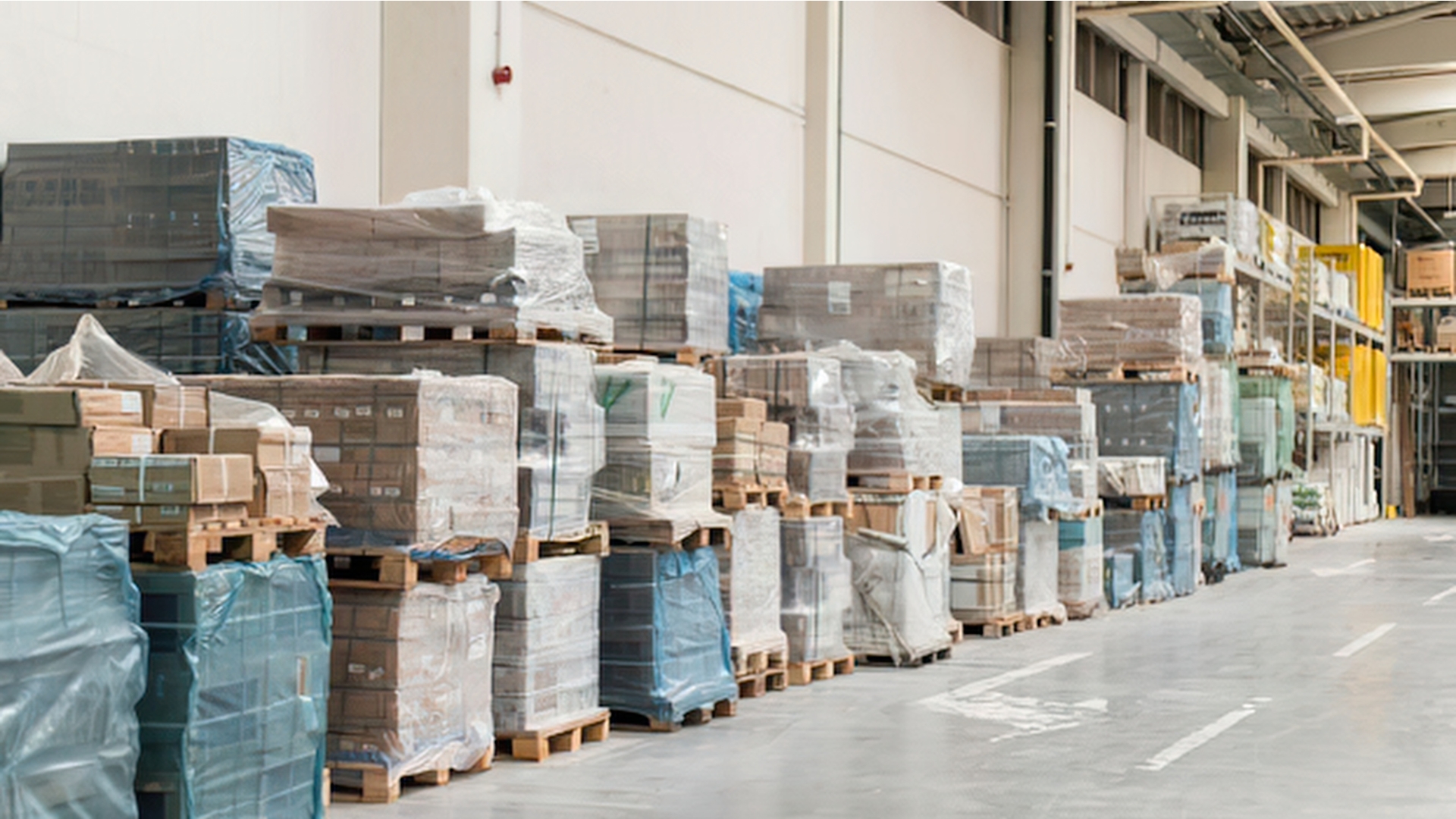
Over the past decade, warehouses have invested heavily in automation. Conveyors, goods-to-person systems, autonomous mobile robots, automated storage and retrieval systems—the equipment lists are impressive. So are the capital expenditure figures.
And yet, many operations leaders will quietly tell you the same thing: the productivity gains they projected haven’t fully materialized. Order volumes have grown. Headcount has stayed flat or declined. But cost-per-unit hasn’t moved the way the business case promised.
The gap sitting at the center of it is a systems integration failure, and it’s one most vendors won’t talk about openly.
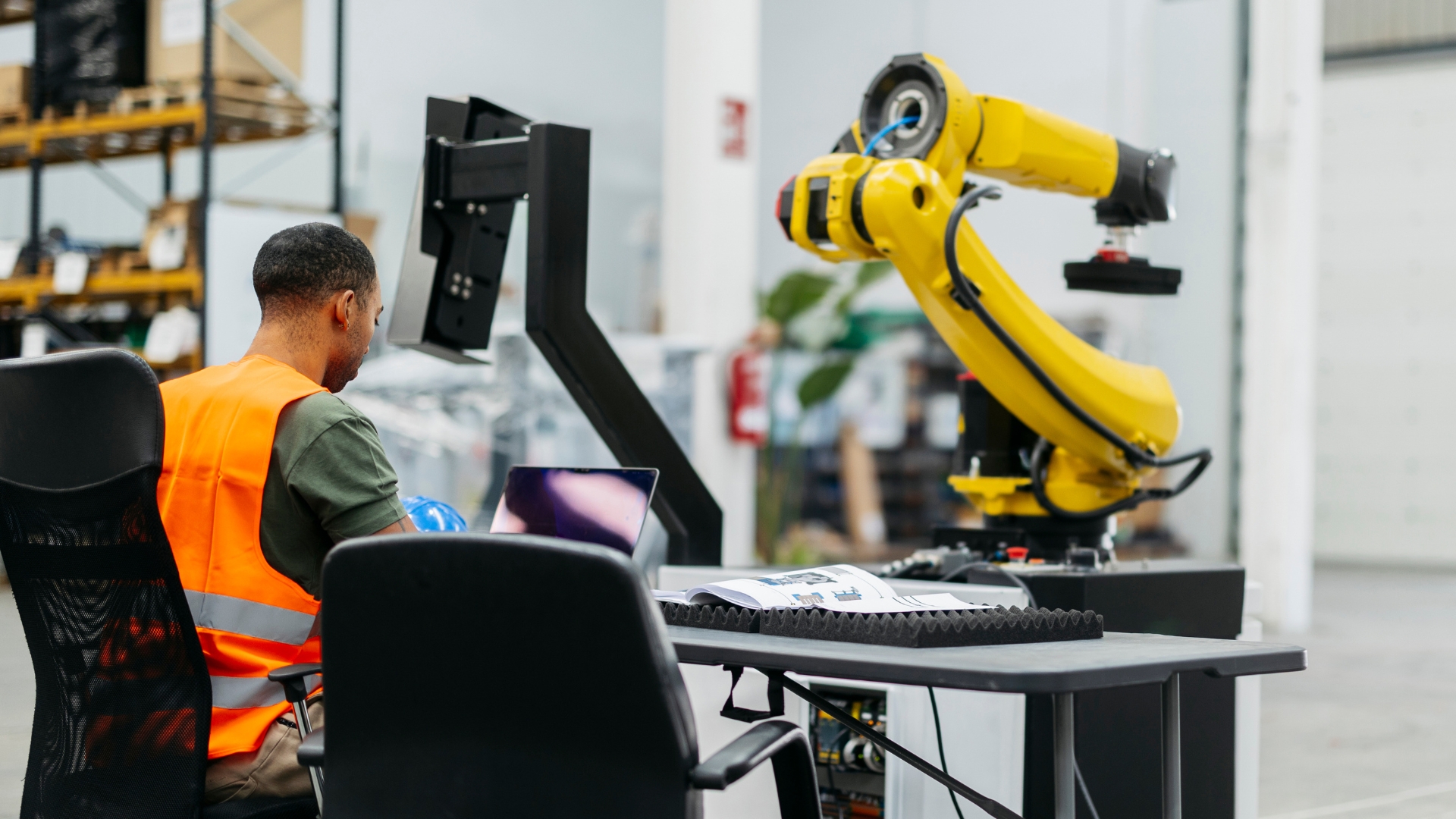
Automation is very good at executing predefined tasks at speed and scale. A robotic picking system will fulfill a batch of orders faster than any manual team can. A conveyor line will move product reliably from receiving to storage. An automated sorter will route parcels without fatigue.
What automation cannot do is decide what to do next when conditions shift mid-shift. It cannot sense that a labor queue is building in one zone while another is idle. It cannot recognize that inbound volume is running 30% above plan and proactively reallocate labor before a bottleneck forms. It cannot look across your entire operation in real time and determine the highest-value action for every person and every asset.
That requires something different. It requires orchestration.
The Gap Between Automation and Performance
Think about what actually happens during a shift. Conditions are never static. A supplier delivers early. A wave of orders hits faster than expected. Two team members call out sick. The robotics system slows down because a zone is congested.
In most warehouses today, a supervisor becomes aware of these issues at some point after they’ve already affected performance. A dashboard refreshes every 30 minutes. An end-of-shift report captures what happened. A manager reviews it the next morning.
By then, the shift is over. You’ve spent your labor hours. You’ve logged the service failures.
That’s the warehouse automation gap, and you can’t solve it by adding more robots or upgrading your WMS. You solve it by adding an intelligence layer that sits above your existing systems and makes operational decisions in real time, continuously, throughout every shift.
Without that layer, automation and labor operate in parallel but not in coordination. Your robotics system optimizes for throughput within its zone. Your WMS manages task assignments based on predefined rules. Your supervisors fill in the gaps by instinct, experience, and a lot of walking around with a radio. The result is a warehouse where the individual parts work well, but the whole system leaves performance on the table.
What Is Warehouse Orchestration?
Warehouse orchestration is the continuous, real-time coordination of labor, inventory, equipment, and task prioritization to match what the operation actually needs at any given moment.
A dashboard shows you what happened. A reporting tool tells you where you missed. Orchestration manages the operation while it’s still running.
Orchestration means the system is actively managing the operation as it unfolds. It ingests data from your WMS, your time-and-attendance system, your robotics platform, and your ERP in real time. It builds a live picture of operational state. And it makes (or recommends) decisions continuously to keep labor aligned with work demand.
This is fundamentally different from what labor management systems have traditionally delivered. Classic LMS tools measure productivity against engineered standards and report variances. That’s useful for accountability. It does not help you prevent a shortfall that’s building right now, in the third hour of a shift, before it becomes a missed SLA.
Warehouse automation orchestration requires closing the loop between what the operation is doing and what it should be doing, in real time. That’s a decision-making problem. And decision-making at shift speed, across a complex operation, is where agentic AI becomes the right tool.
Why WMS and Robotics Alone Can’t Orchestrate a Warehouse
WMS platforms are designed to manage inventory state and direct task execution. They are very good at those things. However, they are not designed to help you make intraday labor rebalancing decisions across a heterogeneous workforce and set of systems.
Most WMS platforms were built around the concept of waves—pre-planned batch processing cycles that determine what work gets done in a given period. That model works when conditions are predictable. It breaks down under demand volatility, unplanned absences, or supply variability.
Robotics platforms present a similar constraint. An autonomous mobile robot fleet is optimized for throughput within its defined operational parameters. It doesn’t know that the human picking team on the other side of the building is falling behind on a high-priority order set. It doesn’t know to slow down, redirect, or flag that a rebalancing decision needs to happen.
These systems create operational silos. Each one is optimized locally. None of them can see across the full operation, correlate what’s happening in real time, and act on that information.
The WMS can tell you how many orders are in queue. The robotics platform can tell you how many picks it completed. Neither can tell you whether the labor on the floor is deployed in the right places to close the gap between where you are and where you need to be by end of shift.
That cross-system, real-time decision layer is missing from most warehouse technology stacks. And the absence of it is where cost leaks in.
The In-Shift Decision Problem No One Is Talking About
Walk any distribution center floor mid-shift and watch what supervisors actually spend their time doing. They are not managing to a plan. They are reacting to deviations from a plan, one situation at a time.
A team member finishes their assigned tasks and is now idle. Someone needs to decide what that person should do next. A zone is falling behind pace. Someone needs to decide whether to pull resources from elsewhere. An inbound shipment arrives with a different mix than expected. Someone needs to decide whether to adjust the picking sequence.
These decisions happen dozens or hundreds of times during every shift. In most warehouses, they are made by individual supervisors based on what they can see, what they know, and how much time they have to think. The rest falls through the cracks.
This is not a failure of the supervisors. It’s a structural gap. One person cannot monitor dozens of variables across a full operation in real time while also coaching team members, managing exceptions, and handling the hundred other things that come up during a shift.
The decisions that need to be made in real time during a warehouse shift include: where to assign the next available worker, when to pull labor from a low-priority area to cover a high-priority one, how to adjust task sequencing when order profiles change mid-wave, and when to escalate because the shift trajectory is no longer on track to meet plan. Today, in most operations, humans are making all of these calls manually, with incomplete information, on a lag.
Warehouse automation orchestration closes this gap by putting the decision-making capability where it needs to be: in a system that can see everything, process it continuously, and act.
What an Intelligence Layer Actually Does
A warehouse intelligence layer sits between your source systems and your operational team. It ingests data from every system in your stack—WMS, ERP, time-and-attendance, robotics, IoT sensors—and builds a unified, real-time operational picture.
From that picture, it continuously asks: is the operation on track to meet its goals? If not, what decisions would bring it back on track? And it either makes those decisions autonomously or surfaces them to the right person with enough context to act immediately.
In practice, this means a few specific things. It means labor is continuously rebalanced to match where work is building, not where it was assigned at the start of the shift. It means supervisors see exceptions that actually require human judgment, not noise. It means performance trajectory is visible in real time so that early-warning signals get acted on before they compound into end-of-shift failures.
A warehouse intelligence layer is not a replacement for your existing systems. Your WMS still manages inventory. Your robotics platform still moves product. Your ERP still owns the order data. The intelligence layer uses all of that information, correlates it, and makes the operational decisions that none of those systems were built to make.
This is what real-time labor orchestration looks like in practice. Not a report that tells you labor efficiency was 82% yesterday, but a system that keeps efficiency from slipping during the shift itself.
Why Agentic AI Is the Right Technology for Warehouse Orchestration
The term agentic AI gets used loosely, so it’s worth being precise about what it means in a warehouse context.
An agentic AI system doesn’t just analyze data and produce a report. It takes actions, or generates specific action recommendations, autonomously and continuously, based on a defined set of goals and constraints. It perceives the current state of the operation, reasons about the best course of action, and executes—without waiting for a human to interpret a dashboard and decide what to do.
Applied to warehouse operations, this means the system monitors every relevant data signal, assesses where the operation is deviating from plan, determines what decisions would correct the deviation, and either acts or surfaces a specific, actionable recommendation to the right person in real time.
This is distinct from predictive analytics, which tells you what might happen. It is distinct from descriptive dashboards, which tell you what did happen. Agentic AI in warehouse decision automation acts on what is happening, continuously, throughout the shift.
The right agentic AI platform for warehouse orchestration has a few specific requirements. It needs to ingest data from heterogeneous systems without requiring a full WMS replacement or months-long integration project. It needs to reason across labor, inventory flow, and task prioritization simultaneously. And it needs to operate at shift speed, meaning decisions surface in minutes or seconds, not the next morning.
For a broader look at how agentic AI is reshaping enterprise operations and supply chains, MIT Technology Review’s Finding Value from AI Agents from Day One is worth the read.

How Orchestration Transforms Intraday Labor Decisions
Labor is the largest controllable cost in most warehouse operations. It is also the most dynamic variable. And it is the variable that most warehouse technology stacks do the worst job of managing in real time.
Traditional labor management focuses on measuring performance after the fact. How did the team perform versus standard? Where were the variances? That’s useful for identifying patterns and coaching over time. It does not help you make better decisions during the shift when those decisions still have value.
Intraday warehouse decisions—the kind that actually move shift performance—are about deployment. Are the right people in the right tasks at the right time, given what the operation actually looks like right now?
When an orchestration layer is managing those decisions, the impact is measurable. Labor hours are matched to demand continuously rather than based on a wave plan set six hours ago. Idle time drops because the system identifies it immediately and generates the next best assignment. Supervisors shift from reacting to managing because the system handles the exception routing and surfaces only the decisions that require human judgment.
The result is not just a labor efficiency improvement. It is a shift in how the operation functions. Supervisors manage to outcomes rather than firefighting individual situations. Labor costs come down not because you cut headcount, but because the hours you have are deployed more effectively across the shift.
What This Looks Like in Practice
Consider a distribution center running a two-shift operation with a mixed workforce of permanent and temporary workers, multiple WMS instances across sites, and a robotics system handling a portion of inbound sortation.
Without an orchestration layer: the wave plan runs as designed. Midway through the shift, inbound volume spikes and the robotics system queue backs up. A supervisor notices the backup, radios a team lead, and reallocates three workers from a lower-priority task. By the time the reallocation happens, 45 minutes of capacity have been lost. The end-of-day report shows a labor variance. A manager reviews it the next morning.
With an orchestration layer: the system detects the queue backup as it develops. It cross-references available labor against current task assignments and generates a reallocation recommendation within minutes. The supervisor reviews a specific recommendation on their mobile device, approves it, and the affected workers receive updated assignments through the WMS. The backup clears. The shift ends on pace.
The second scenario doesn’t require different equipment or a different WMS. It requires a system that can see across the operation, reason about the tradeoffs, and generate a decision before the opportunity to act on it has passed.
How Rebus Intraday Delivers the Intelligence Layer
Rebus Intraday is an agentic AI extension for Rebus LMS. It monitors live shift data—order flow, staffing, and real-time performance—to identify which workloads are at risk of missing service levels and recommend exactly where to move labor before problems escalate.
The key word is “recommend.” Supervisors stay in the loop. Intraday surfaces a specific action: which workers to move, where, and why, so the person running the shift can make the call with full context rather than incomplete information and a best guess.
It is built on the data already flowing through Rebus LMS. No new integrations, no new connections to set up. Supervisors can also ask questions about their shift in plain language and get answers from live operational data, not generic guidance.
This is what the intelligence layer looks like in practice. The shift is running. Conditions are changing. And instead of a supervisor piecing together signals from multiple dashboards and making a reactive call after the window has passed, the system flags the risk, shows the data, and offers a clear recommendation in time to act on it.
Rebus Intraday is an intelligence layer that makes your existing automation investment perform the way it was supposed to.
Automation Gets You in the Game. Orchestration Wins It.
Warehouse automation has delivered real value. It has changed what’s possible in terms of throughput, accuracy, and physical scale. No one is arguing against it.
But the operations that are finding the most performance improvement right now are the ones that have recognized automation as necessary but not sufficient. Moving product faster doesn’t help if labor isn’t deployed to match. Having great data doesn’t help if the decisions it should drive still happen on a lag.
The intelligence layer is what turns a collection of automated systems into a coordinated operation. It’s what closes the gap between automation and actual performance. And with agentic AI platforms like Rebus Intraday, it’s now something operations leaders can deploy on top of the systems they already have.
The shift isn’t waiting for you to catch up. An orchestration layer means you don’t have to.
Frequently Asked Questions About Warehouse Optimization and Orchestration
- What is the difference between warehouse automation and orchestration?
Automation handles predefined tasks at speed and scale. Orchestration coordinates labor, tasks, and systems in real time to match operational conditions as they change. Automation executes; orchestration decides.
- What is a warehouse intelligence layer?
It’s a system that ingests data from your WMS, ERP, robotics, and time-and-attendance tools in real time, builds a unified operational view, and makes or surfaces decisions to keep performance on track during a shift. It sits above your existing systems without replacing them.
- What is agentic AI in warehouse operations?
Agentic AI perceives the current state of an operation, reasons about the best course of action, and acts or recommends autonomously. In a warehouse context, it continuously monitors shift performance and generates specific labor and operational decisions without waiting for human intervention.
- How does orchestration improve in-shift labor performance?
By making labor deployment decisions in real time rather than based on a static wave plan. When demand shifts mid-shift, an orchestration layer identifies the deviation, determines the optimal reallocation, and surfaces or executes the decision before the window to act on it closes.
- Can an orchestration layer work with my existing WMS?
Yes. Rebus integrates with leading WMS platforms and pulls data into a unified operational view. Intraday is built on top of that – it runs on data already flowing through Rebus LMS, with no new integrations required. You don’t need to replace or reconfigure anything to add real-time AI decision support.
- What decisions should be automated in a warehouse shift?
Labor rebalancing, task re-prioritization, exception flagging, and performance trajectory monitoring are all candidates for automated decision-making. Decisions that require human judgment – escalations, disciplinary issues, safety responses – stay with supervisors. The system handles the volume of routine operational decisions so supervisors can focus where human judgment actually matters.
- How does Rebus Intraday support warehouse orchestration?
Intraday monitors live shift data through Rebus LMS and identifies which workloads are at risk of missing service levels. It then recommends specific labor reallocation actions—which workers to move, where, and why—so supervisors can act before problems compound. The result is real-time decision support during the shift itself, not a report about what went wrong after it.
- What ROI can I expect from a warehouse intelligence layer?
The primary drivers are labor efficiency improvement and reduction in end-of-shift variance. Operations that deploy an intelligence layer typically see gains from reduced idle time, better labor-to-demand alignment, and a reduction in the firefighting cost supervisors carry today. The ROI depends on scale, but the math is straightforward: if your labor budget is your largest operational cost and your deployment decisions are made on a lag, you are paying for hours that aren’t generating output.