

















Introduction
This post looks at why many labor programs break down at the supervisor level, not because of effort or intent, but because of limited visibility and structure. It explores how blind spots early in the shift lead to missed opportunities, reactive management, and inconsistent results, and why giving supervisors clearer insight changes everything.
Table of Contents
If you’ve ever sat through a software pitch loaded with buzzwords, you know how confusing “warehouse visibility” can sound. But in real operations, it’s actually pretty straightforward. Teams just want to see what’s happening right now, where work’s slowing down, and how they can adjust without waiting for reports or digging through five different systems.
That’s really what Inventory & Process Analytics is all about. Not big dashboards for the sake of dashboards, not complicated architecture. Just understanding warehouse visibility so operators can make better decisions in the moment.
One of my favorite parts of seeing I&PA roll out across different industries is seeing how the use cases take shape. Every warehouse uses the platform differently based on how their day actually works. So instead of giving you the product-page explanation, I want to walk you through the real ways teams are putting I&PA to work.
And if you’ve read our blog about common warehouse pain points, you’ll probably recognize a few of those frustrations coming to life here.
Without further ado, let’s walk through a few real stories from the warehouse floor.
1. Seeing inventory in real time instead of yesterday’s version of the truth
One of the biggest mindset shifts with I&PA is moving from lagging reports to real-time warehouse visibility. It sounds subtle, but it changes everything. When teams finally get a view that matches what they’re seeing on the floor, the entire operation feels steadier.
Take one of our retail customers. They deal with constant product rotation, tons of SKUs, and fast-changing priorities. Before I&PA, their planners were relying on reports that were always at least one shift old. They were never totally sure what was actually available, and the warehouse team was constantly fielding questions.
Now they’re watching live movement. They can see when items build up in receiving, when putaway lags, or when staging starts stacking faster than expected. They don’t wait hours to learn that something is off. They see it as it happens.
That’s at the heart of warehouse visibility. It’s about seeing the truth early enough to act on it.
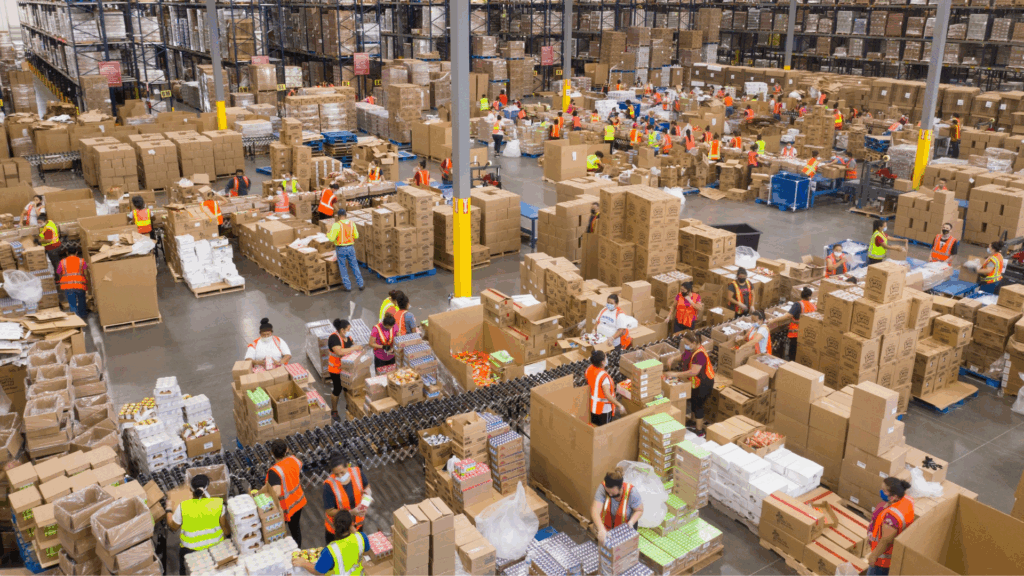
2. Watching how work flows through the building and catching slowdowns before they pile up
If you’ve ever run a warehouse, you know you can feel bottlenecks long before you can prove them. It’s something every operator understands instinctively. You notice a shift in the building’s rhythm. A zone suddenly feels heavy. A process that normally flies starts dragging.
I&PA gives teams that missing line of sight that turns instinct into action.
A few food and beverage operations use it this way every single day. They keep an eye on work flowing through receiving, replenishment, picking, and shipping. When a slowdown starts forming, they see it early instead of discovering it three hours later when orders back up.
The goal isn’t to analyze everything. It’s to catch problems while they’re still small. Warehouse visibility is about timing more than technology. You can fix almost anything if you know about it soon enough.
3. Keeping high velocity pick operations running smoothly
If you live in a high-volume e-commerce or retail fulfillment world, you know picking is where the heartbeat of the operation lives, and even a tiny slowdown can quickly cause a domino effect throughout the warehouse.
One of our retail brands uses I&PA to monitor their pick zones in real time. If a zone starts slipping, they don’t wait for the slowdown to ripple outward. They shift labor right away. No chaos, no panic, no finger pointing, just a clear signal and a quick adjustment.
They told me the best part isn’t necessarily the data. It’s the calm it brings to the environment. When people aren’t guessing, they’re not stressed. Warehouse visibility isn’t about creating pressure. It’s about giving teams the info they need to keep the day steady.
4. Reducing waste and rework by spotting process delays earlier
Food and beverage teams are experts at dealing with sensitive product, high-stakes timing, and constant movement. The challenge is that delays don’t just slow things down, they can lead to actual waste, spoilage, or rework.
A produce distributor we work with uses I&PA to track how long product sits between steps. When something stops moving, they see it immediately and jump on it before it becomes a loss.
Another packaged-goods manufacturer uses the platform to understand where materials are stalling so they can adjust staffing or change workflows before delays become expensive.
The common theme is early visibility. You can’t eliminate every delay, but if you can see them sooner, you can control the outcomes a whole lot better.

5. Giving supervisors a simple, real-time view of what’s happening on their shift
A supervisor’s job is a mix of air traffic control, coaching, firefighting, and keeping morale steady. And none of that’s easy when they’re working without a clear picture of what’s happening.
This is where I&PA often becomes the tool supervisors rely on most. Not because it’s fancy, but because it’s simple.
Supervisors can see:
- where labor’s overloaded
- where work’s piling up
- which functions are on pace
- which tasks need attention right now
They’re no longer chasing information or relying on gut alone. They’ve got real time warehouse visibility that supports smarter decisions.
One supervisor told me, “I finally feel like I can coach instead of react.” That’s the power of clarity.
6. Understanding outbound flow so transportation isn’t guessing anymore
Outbound is one of the most stressful parts of the warehouse. Loads shift in priority. Transportation wants status updates. Supervisors are trying to time labor around when the dock’s going to get busy.
When you don’t have warehouse visibility into outbound progress, everything feels last minute.
One beverage manufacturer uses I&PA to track a shipment’s readiness step-by-step. Transportation finally has what they’ve wanted for years: a clear, real-time answer to “Is the load actually ready?”
And because everything’s timestamped, electronic BOL workflows become easier and more accurate. No hunting for information after the fact. No hoping someone documented the right thing.
Visibility doesn’t just help the warehouse. It helps the whole logistics chain move with more confidence.
7. Supporting continuous improvement with actual evidence instead of guesswork
Whether you’re a retailer, a food company, or a 3PL, continuous improvement is part of the job. But it’s hard to improve anything when you’re relying on anecdotes instead of proof.
One apparel brand uses I&PA to test micro changes in their putaway workflow. They tweak a step, watch the data, and keep only the changes that genuinely help. It’s like turning on a light. Suddenly the cause-and-effect becomes obvious.
Another packaged goods company uses the platform to compare how long certain tasks take across shifts. With that insight, they’ve redesigned staffing plans that are more realistic and less stressful.
Continuous improvement isn’t about giant projects. It’s about finally having visibility into how the work actually happens, not how you think it happens.
A quick wrap up
These seven use cases are happening every day across industries like retail, F&B, consumer goods, and 3PL operations. None of them are complex. None require a huge transformation. They’re just practical examples of how teams use warehouse visibility through I&PA to run smoother, calmer, more predictable days.
The biggest surprise for most customers is how quickly things feel easier once they can actually see what’s happening while it’s happening.
If you want to understand the frustrations that push operators to seek visibility tools in the first place, read our blog post, 9 Pain Points Every Warehouse Operator Feels and How Better Visibility Can Help. It will help you know you’re not alone.
If you’re ready to learn more about how Rebus gives teams the visibility they need to succeed, you can learn more here: Rebus Inventory & Process Analytics.